
The Mental'eau project
Research project overview
The Mental’Eau project primarily aims to explore the links between the health of aquatic ecosystems and the well-being of the people who interact with them. It also seeks to raise awareness among users about the challenges addressed by the One Health concept and to develop science communication initiatives around the research project. These efforts could contribute to greater acceptance of aquatic ecosystem restoration policies by highlighting the social benefits associated with restored ecosystems.
This research project was developed in response to the 2021 Call for Expressions of Interest launched by the Rhine-Meuse Water Agency. Entitled “Water & Health,” this programme aims to investigate how water represents a key issue and an important determinant of human health, and more broadly of environmental health.
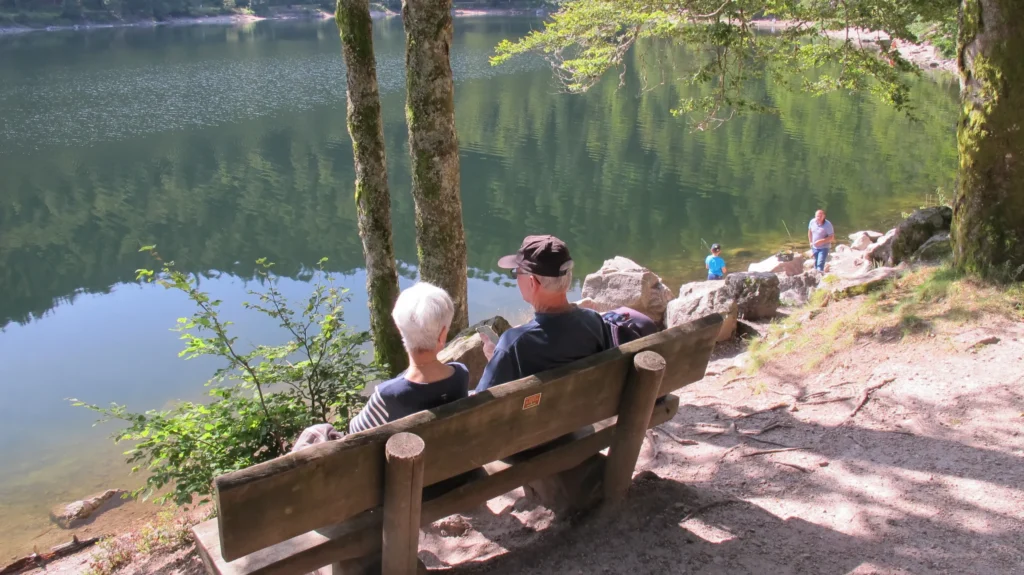
The Mental’Eau project is part of the research activities carried out by the Moselle Workshop Zone (ZAM), particularly within the Human, Nature Relationships research theme, and by the Strasbourg Urban Environment Workshop Zone (ZAEU). As members of the French Long-Term Socio-Ecological Research Network (Réseau des Zones Ateliers), these research infrastructures develop interdisciplinary research, at the interface between the humanities and social sciences and the natural sciences, as well as transdisciplinary research conducted in collaboration with local stakeholders. These two dimensions are central to the Mental’Eau project.
Project background
In a rapidly transforming global context marked by climate change, biodiversity loss, the emergence of new pandemics, and other major challenges, the One Health concept appears particularly relevant. From a scientific perspective, it provides a framework for understanding and potentially preventing these crises. From a social and even political perspective, it also offers a way to make more visible the ecosystem interactions and interdependencies in which humans are embedded. This research seeks to explore both the social and scientific dimensions of the One Health concept, focusing specifically on the relationships between humans and aquatic ecosystems (rivers, lakes, canals, and other water bodies).
Beyond the growing societal expectations regarding the integration of humanities and social sciences into research traditionally conducted within the natural and experimental sciences, issues related to ecosystems and, more broadly, global environmental challenges (such as climate change and biodiversity loss) benefit from dialogue across a diversity of disciplinary fields. Such an approach helps to better document both the complexity of the phenomena under study and the challenges associated with public policy implementation and changes in individual practices.
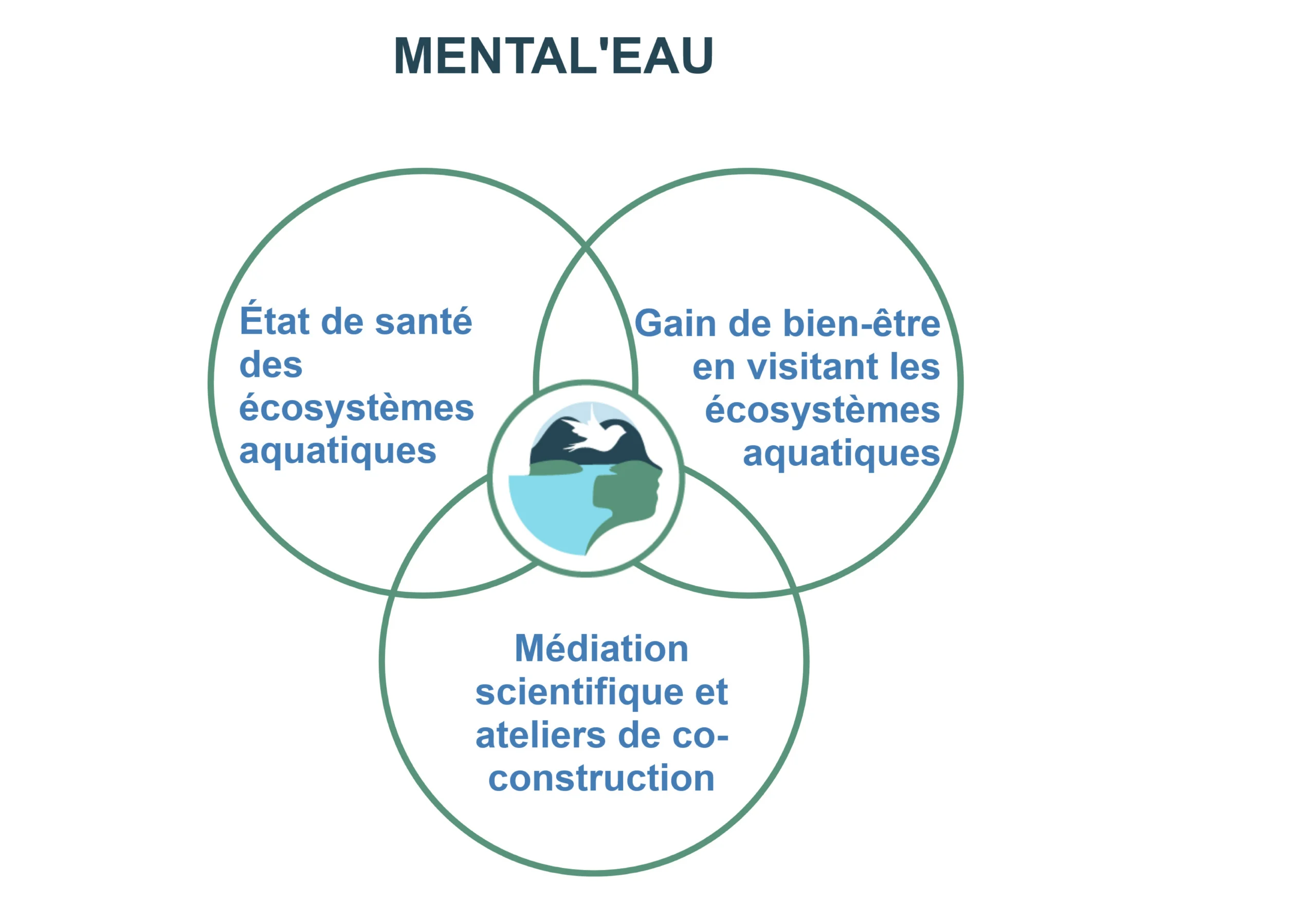
As part of this interdisciplinary research, which brings together the natural sciences (hydrology, geochemistry, botany, ecology, etc.) and the humanities and social sciences (geography, economics, sociology, etc.), we seek to investigate the relationships that individuals develop with aquatic ecosystems, understood as both landscapes and spaces for a wide range of recreational activities.
- How can these ecosystems contribute to human health (both physical and psychological) and/or wellbeing?
- Conversely, how can users’ perceptions contribute to improving the quality of aquatic ecosystems?
- To what extent can human health and ecosystem health be connected within the framework of the One Health concept?
- Finally, how is this concept perceived and integrated (or not) by individuals, and what implications might this have for their practices and experiences of these environments?
The « One health » concept
The term “One Health” (or “one health”) emerged in the early 2000s within various spheres of global public policy. It was gradually adopted by several specialized United Nations agencies, including the World Health Organization (WHO), the World Organisation for Animal Health (WOAH, formerly OIE), the Food and Agriculture Organization of the United Nations (FAO), and, more recently, the United Nations Environment Programme (UNEP).
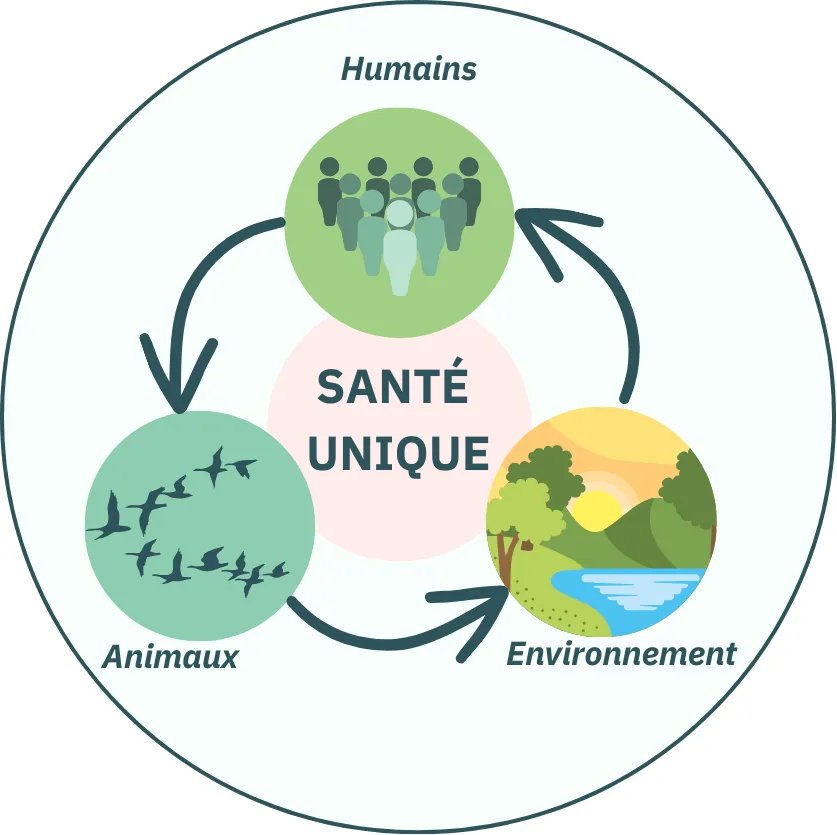
This concept highlights the interdependence of environmental, animal, and human health. It also emphasizes the need to design public health policies, at both local and global scales, based on coordinated actions that consider both human populations and their environments.
The One Health concept has developed in a context characterized by the destruction of natural habitats, pollution of air, water, and soils, the depletion of natural resources, and global population growth. It calls for a systemic approach to health, recognizing the interconnections between human well-being, animal health, and the state of ecosystems.
Research objectives
The Mental’Eau project addresses two main objectives:
First, to provide a comprehensive and relevant assessment of the “health status” of aquatic ecosystems with diverse characteristics;
Second, to evaluate the benefits that individuals derive from spending time in these ecosystems, in terms of wellbeing and personal perceptions.
This research project is exploratory in nature. The implemented methodology is innovative: it aims to generate new knowledge and develop new assessment methods, while providing fresh insights into the relationships between humans and nature, with a specific focus on aquatic ecosystems. These findings may also contribute to discussions on the social acceptability and collective benefits of aquatic ecosystem restoration initiatives by assessing the potential well-being gains associated with the improvement or recovery of good ecological status in these ecosystems. Finally, the results of this research will contribute to existing knowledge while also helping to generate and refine new research questions.
Research directions
The project is structured around two complementary research areas. The first aims to develop a method for assessing the health status of aquatic ecosystems, in order to objectively characterize their condition based on multiple dimensions related to the ecological functions that structure these systems. The second focuses on analyzing the perceptions of people who visit these sites, as well as their motivations for doing so, through a multi-criteria sociological and economic approach.
The cross-analysis of these two research areas will help identify the relationships between the use of aquatic environments and the ecological characteristics of these systems.
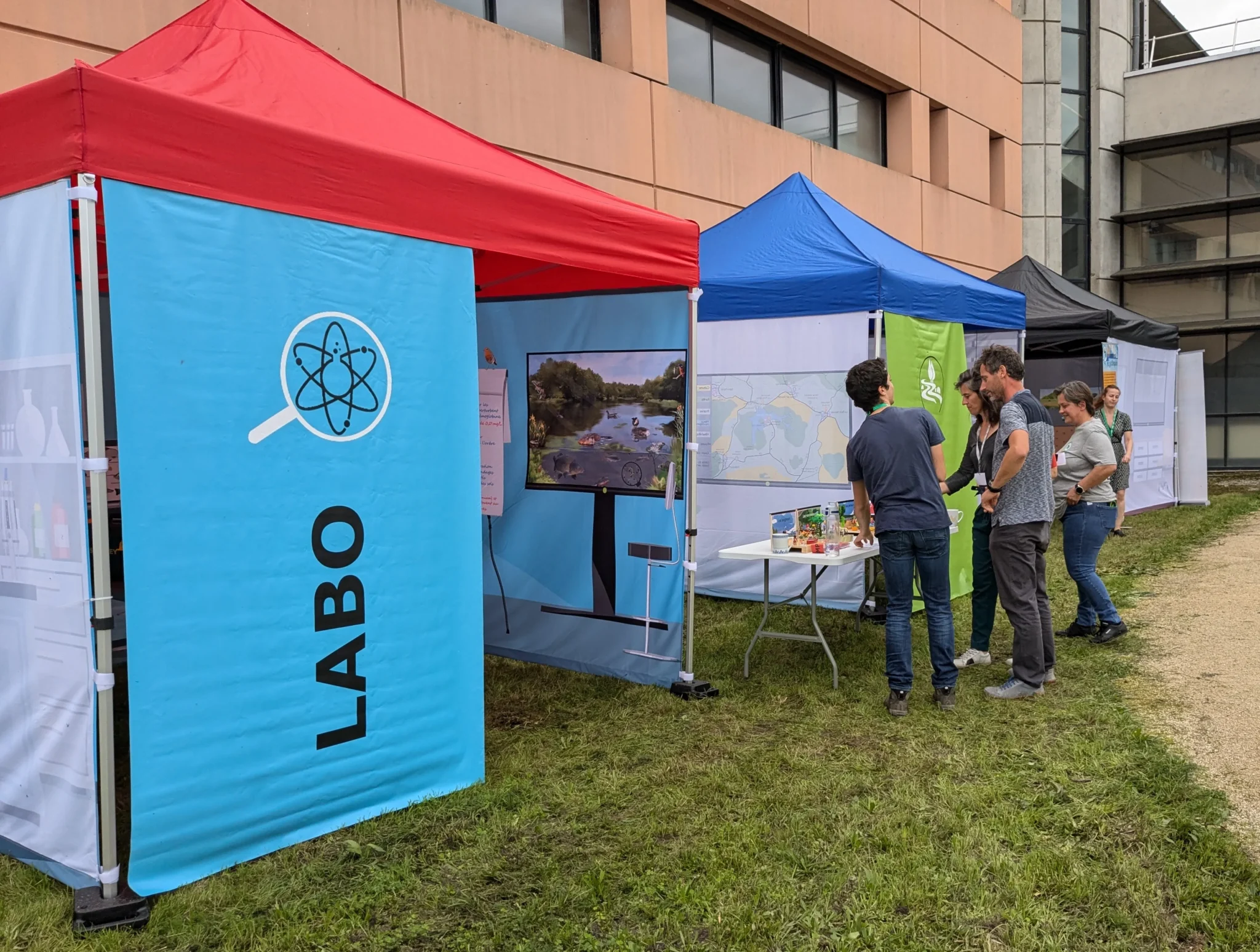
A complementary approach based on science communication and public engagement will also be implemented. It will involve awareness-raising activities for users at selected sites, notably through the use of a serious game and participatory workshops. These initiatives will make it possible to assess how users’ perceptions evolve according to their level of knowledge and access to information.
Research timeline
Phase 1:
2023 – Preparation
The study benefited from preparatory work carried out outside the framework of the Mental’Eau agreement, in the form of supervised student projects focused on a literature review. This work was conducted in 2023 by three engineering students from JUNIA Engineering School in Lille.
Phase 2:
2024 – Establishing the Framework
This preliminary phase focused on the selection and characterization of a panel of study sites. It was conducted in consultation with all project partners. The site selection criteria included visitor diversity, geographical location, and the range of ecosystem types represented. These criteria made it possible to classify the sites according to a descriptive typology, in order to assess their comparability and the preliminary relevance of the proposed assessment methodology.
Phase 3:
2024 – Communication and Science Outreach Materials
The science communication approach is based on awareness-raising activities targeting users at selected sites, notably through the use of serious games. It aims to analyse how users’ perceptions evolve according to their level of knowledge and awareness. The project website and communication materials specifically developed for this initiative also contribute to this objective.
Phase 4:
2024 – Exploratory Method for Ecological Assessment
The next phase of the project focused on developing a method to characterize the health status of aquatic ecosystems through a comprehensive and multi-metric approach. This methodological framework establishes a conceptual basis for assessing the “health” of an aquatic ecosystem and enables the development of a method applicable to each site included in the study panel.
Phase 5:
2025 – Preparation of the Sociological Analysis
The sociological analysis began with the development of psychosocial and socio-economic questionnaires designed to document the psychosocial status of visitors to the sites selected within the ZAM and ZAEU study areas.
Phase 6:
2026 – Ecological and Sociological Analyses
This phase focuses on the collection of ecological and sociological data. The cross-analysis of these two research areas will help identify the relationships between site use and the characteristics of aquatic systems.
Phase 7:
2026 – Territorial Analysis
The territorial analysis of the different sites included in the study panel will also contribute to completing the quantitative cross-analysis of environmental and sociological data.
Phase 8:
2027 – Participatory Workshops and Interviews
The final fieldwork phase will involve organizing participatory workshops and conducting interviews with local residents, elected representatives, and site managers. For this phase, five to six sites will be selected. The initial selection includes the Moselle River site at Maron, Messein Pond, the Moselle Sauvage Nature Reserve, Diefenbach Pond, the Asnée Stream, and the Port of Toul.